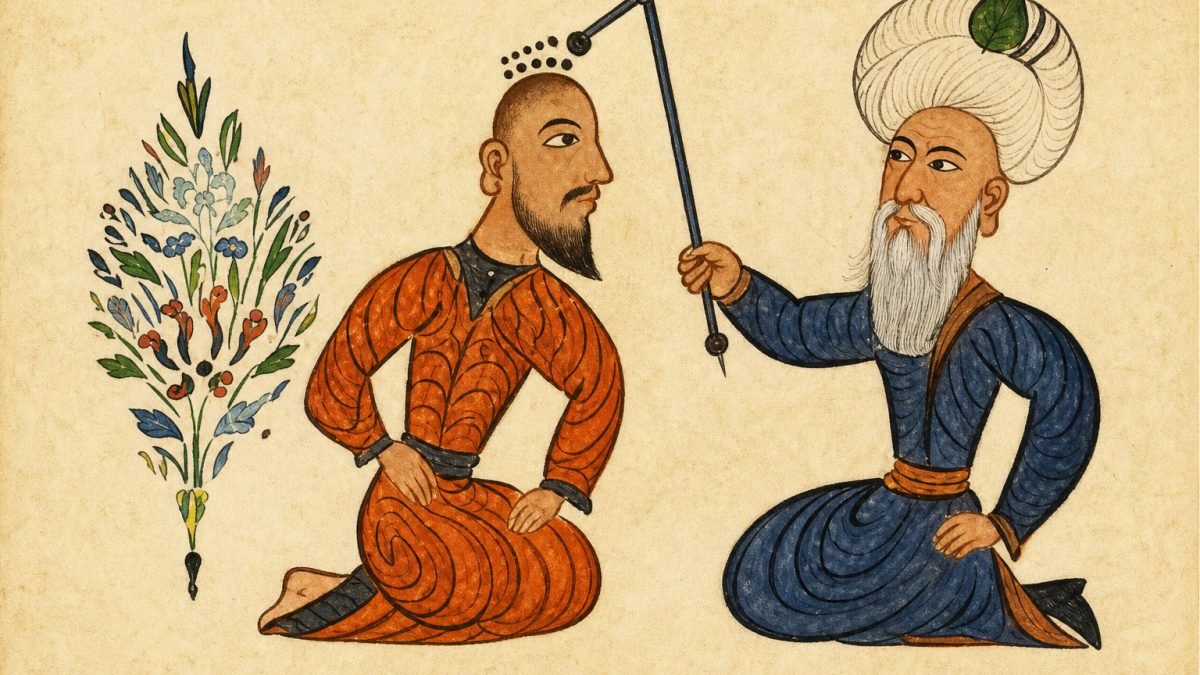
Did you know that the foundations of modern psychology were actually laid by Muslim scholars who lived about 1000 years ago? Early Islamic scholars worked in a field they called İlmül Nefs — that is, the Science of the Soul / Self — and they produced deep studies of the human mind and behavior long before Western psychology took its modern shape.
They worked especially on depression, stress, anxiety, child development and similar areas, and they developed techniques that look modern today, including forms of hypnosis. They recorded their findings in their books; many of those works later influenced later centuries of learning.
For example: Al-Kindi explained the source of sadness with cognitive strategies; Ibn Sina (Avicenna) defined depression (melancholy) as a mood disorder and used hypnosis in treatment.
In the Seljuk period it is known that there were three large hospitals for mental and emotional health in Anatolia. One of them is the Gevher Hatun Şifahanesi in Divriği, Sivas. Hospitals founded in the era of Selim II are also part of this tradition of care for the mind.
In child development and educational sciences, Burhaneddin Ez-Zernuci among the Mamluks and Ibnül Hac in Andalusia also produced important work.
These facts show that the common claim that psychology was born only in the West is wrong; they reveal the huge investment and contribution of Islamic civilization to the science of the human being.
Sources:
- Haque, A. (2004). Psychology from Islamic Perspective: Contributions of Early Muslim Scholars and Challenges to Contemporary Muslim Psychologists. Journal of Religion and Health, 43(4), 357-377.
- Batıya Doğru Akan Nehir (TRT documentary)
- Burhaneddin Ez Zernuci; Talimül Müteallim
- Mehmet Emin Ay; Ailede İdeal Din Eğitimi