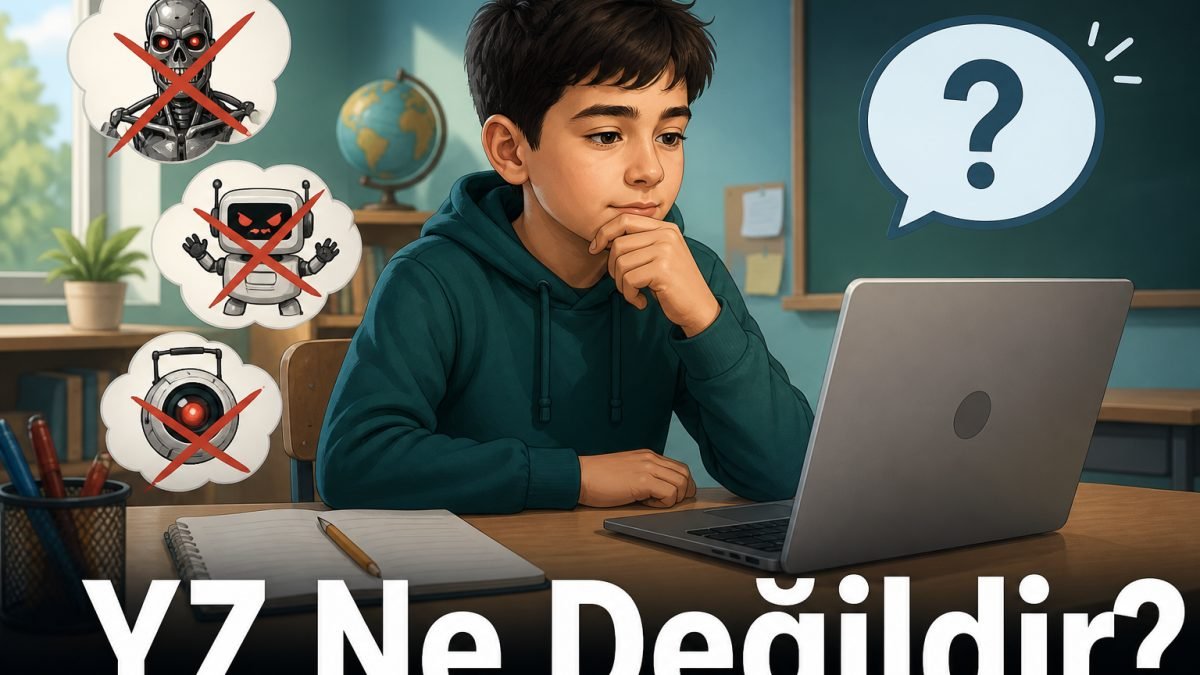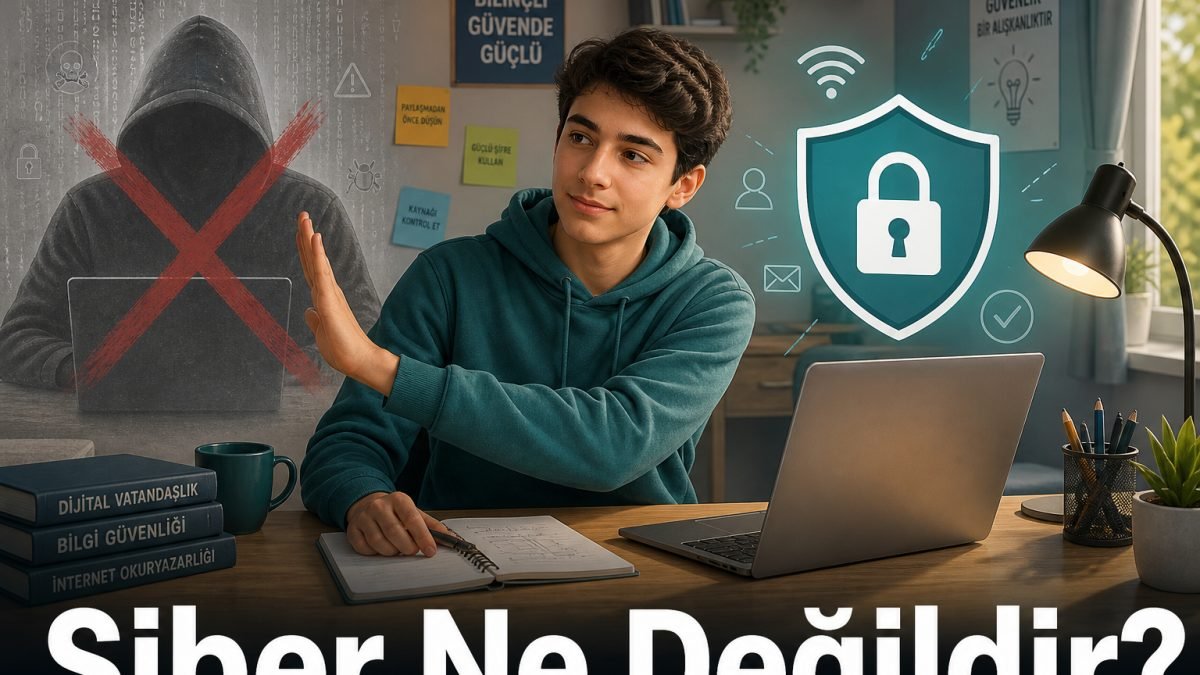
When people hear "cybersecurity," many picture movie scenes: a dark room, green text on a screen, a hero who knows everything. Real life is simpler. At school or at home, two extremes also appear often: one person talks as if they know it all; another says "I do not get it" and drops the topic. Both make learning harder. In this article we will simplify the idea: cybersecurity is not a big war; it is daily attention and good habits.
This article is the first part of our Cybersecurity Awareness series. You can think of it as a continuation of our Mindful Internet articles. There we talked about passwords, fake links, and digital bullying. Here we take one more step: the habit of protecting ourselves and the people close to us. This series does not teach attack methods or "how do you break in?" What we explain is more like a seat belt: life goes on; with a little more care, you stay safer.
Short note: Cybersecurity does not mean "I know everything and you do not." It means being able to say "I can make a mistake too; that is why checking once more is good." The goal is not superiority; it is protection.
First: what it is not
- It is not a movie hacker story. Everyday security is made of simple steps: a strong password, an up-to-date device, and pausing to think when a message looks suspicious.
- It is not only for experts. Anyone with a phone or an account has a small but important responsibility.
- It is not spreading panic. "Everything is over, shut the internet down" does not make anyone stronger. Clear information and calm steps help.
- It is not shaming someone else. Humiliating a person who clicked the wrong thing does not teach security; it stops them from asking questions.
- It is not teaching how to attack. In this series there is no "how do you attack?" There is "how do I avoid being tricked?" and "what do I do if something goes wrong?"
So what is it?
In short: trying not to open the wrong door in digital life and knowing the calm, correct next step if a problem appears. It is like wearing safety glasses in the workshop. Glasses do not make you a hero; they protect your eyes. You still do the real work.
In more formal words: cybersecurity is the set of knowledge and behaviours that protect accounts, devices, personal data, and digital communication against unauthorized access, fraud, and malware. In school and family life, the practical meaning is often this: recognize a suspicious request, do not rush, and ask a trusted person when needed.
| Common belief | A more realistic view |
|---|---|
| "Nothing will happen to me." | You do not need to be famous to be a target. Anyone who is rushed, tired, or under "click now" pressure can be at risk. |
| "I am not a computer person." | Most basic precautions do not need technical genius; they need habits. Asking when you do not understand is also a security step. |
| "Antivirus is enough." | Security software helps. But clicking a suspicious message or sharing a password is a separate issue; software alone does not solve that. |
| "Security is boring or scary." | When it is explained well, it is practical: verify the sender; if you are unsure, ask. |
Short notes for students, parents, and teachers
- Student / young person: Your accounts, games, and photos belong to you. Protection is not about banning everything; it helps keep control in your hands.
- Parent: Saying "come, let us look together" often works better than scaring. When you share a common language, a child asks questions more easily.
- Teacher: You do not have to know every detail. A shared classroom language and a climate of "if something went wrong, you can tell without shame" are already very valuable.
Examples close to real life
1. Saying "I do not get it" and leaving everything to someone else
Having a friend type your password, or saying "you check" and handing over the whole screen, feels easy. Later it may become unclear who controls the account. Asking for help when you do not understand is right; giving away the key to your main account is a separate risk.
2. The "know-it-all" attitude
Mocking a friend who clicked a wrong message can make that person stop asking questions. A security culture grows through help, not shame. "It happens; let us fix it together" is healthier.
3. Mixing movie effects with reality
Seeing unusual text on a screen does not mean you must panic and shout "we are hacked." Sometimes it is a simple system warning; sometimes it is exaggerated advertising. Stay calm first; then check from a trusted source or with someone who knows.
4. Treating it as a "small thing"
A school email, a class group, or a family chat can look "unimportant." Yet a wrong step from there can tire a family or a class. You do not need to be a big target; small accounts matter too.
Practical reminders that can help
- If you do not understand a warning, you can ask a trusted adult, parent, or teacher.
- Even on messages that say "urgent," pausing to verify the sender is useful.
- Turning security into an ego contest makes learning harder.
- Using someone's mistake as classroom entertainment blocks people from asking for help.
Information note: This content is for informational purposes only. It does not replace school, institutional, or official procedures, user manuals, or authorized instructions.
Short checklist
- Do I think of cybersecurity like a movie, or like a daily habit?
- Can I help instead of trying to feel superior?
- Do I have a trusted person I can ask when I do not understand?
- Am I asking "how do I stay safe?" instead of "how do you attack?"
What is next?
In this article we talked about what cybersecurity is and is not. In the next article, without exaggeration, we will look at a threat map: who targets whom, and why? The aim is not to spread fear; it is to help you pause for one second and ask, "why did this message arrive?"
Security is not showing off; it is living carefully.